

When you hire a contractor, you expect them to help bring your vision to life—not become the biggest obstacle standing in the way of it.
Whether you’re remodeling a kitchen in Davis Square, renovating a triple-decker in Winter Hill, adding an addition in East Somerville, or restoring a multifamily investment property near Union Square, hiring the right contractor should make the process easier—not more stressful.
Unfortunately, that isn’t always what happens.
At Velney Construction, we’ve helped many homeowners throughout Somerville who found themselves asking one difficult question:
“Do I need to fire my contractor?”
It’s never an easy decision.
Firing a contractor can feel a lot like ending a bad relationship.
You wanted it to work.
You gave them the benefit of the doubt.
You ignored the warning signs because you hoped things would improve.
Then weeks turn into months.
Deadlines are missed.
Communication disappears.
The budget keeps growing.
Suddenly, you’re wondering if keeping the contractor is doing more damage than starting over.
If you’re searching for how to fire a contractor in Somerville, MA, you’re not alone.
More importantly, I understand exactly what you’re experiencing because I’ve been in your shoes.
Table of Contents
- My Story: Why I Understand This Better Than Most Contractors
- When It’s Time to Fire a Contractor
- Sometimes the City Makes the Decision for You
- Stop Work Orders in Somerville
- Contractors Working Without Permits
- Hiring an Unlicensed Contractor
- Protect Yourself Before You Ever Hire a Contractor
- Document Everything
- How to Fire a Contractor Professionally
- What To Do After You Fire Your Contractor
- Can Another Contractor Finish the Project?
- Why Homeowners Choose Velney Construction
- Frequently Asked Questions
My Story: The Reason I Became a Contractor
One of the questions I get asked most often is,
“Why did you start Velney Construction?”
Most people assume it was because I always dreamed about owning a construction company.
The truth is much different.
I actually became passionate about construction because I was once the homeowner who had to fire my own contractor.
Years ago, I hired a contractor to renovate one of my investment properties.
Like many homeowners, I believed everything they promised.
They seemed knowledgeable.
They assured me the project would stay on schedule.
They promised quality workmanship.
Unfortunately, that wasn’t what happened.
The project slowly started falling apart.
Communication became inconsistent.
The schedule slipped further behind every week.
Some work was never completed.
Excuses became more common than progress.
Eventually, I reached a point where I had to make one of the hardest decisions a property owner can make.
I fired the contractor.
Unfortunately, that wasn’t the end of the story.
The project became so complicated that I eventually had to take the contractor to court over unfinished work and damages caused by delays.
It was stressful.
It was expensive.
It delayed my project far longer than it should have.
Looking back today, I’m actually grateful for that experience.
Not because I enjoyed going through it—but because it changed the way I think about construction forever.
That difficult experience became one of the biggest reasons I founded Velney Construction.
Today, every project we complete is built around the things I wish I had received as a homeowner:
- Honest communication
- Proper permitting
- Realistic scheduling
- Transparent pricing
- Licensed professionals
- Quality craftsmanship
- Accountability from start to finish
I often tell clients:
“I don’t just think like a contractor—I still think like the homeowner who once had to fire one.”
That perspective shapes every decision we make.
When Is It Time to Fire a Contractor?
Let’s start with something important.
Not every problem means you should immediately terminate your contractor.
Construction projects are complicated.
Materials get delayed.
Inspections fail.
Weather causes setbacks.
Even the best contractors occasionally encounter unexpected problems.
The difference is how they respond.
Good contractors communicate.
They explain what’s happening.
They present solutions.
They keep moving the project forward.
Bad contractors do the opposite.
The real question isn’t:
“Did something go wrong?”
Instead ask yourself:
“Is this contractor still earning my trust?”
Sometimes homeowners hold onto a contractor simply because they’re afraid starting over will take longer.
Ironically, keeping the wrong contractor often costs far more time and money than replacing them.
Common Warning Signs It’s Time to Fire a Contractor
They stop communicating.
Communication is everything on a construction project.
If your contractor consistently ignores calls, texts, or emails, that’s one of the biggest warning signs.
Good contractors don’t disappear.
They stop showing up.
One missed day happens.
Three missed days can happen.
Weeks without anyone on-site?
That’s a different story.
If your project has become a ghost town, it’s time to start asking difficult questions.
Every conversation becomes another excuse.
“We’re waiting on materials.”
“My electrician got sick.”
“The inspector never called.”
“The supplier is backed up.”
Sometimes these things happen.
But if every week comes with another excuse instead of measurable progress, you need to evaluate whether the project is moving forward at all.
They keep asking for more money.
Unexpected conditions happen during renovations.
Legitimate change orders are part of construction.
However, repeatedly asking for additional money without documentation, pricing, or justification should raise immediate concerns.
Everything should be documented.
Professional contractors explain why costs changed.
They don’t simply demand another check.
Poor workmanship starts becoming obvious.
Crooked tile.
Uneven flooring.
Poor framing.
Improper plumbing.
Unsafe electrical work.
Code violations.
These aren’t simply cosmetic issues.
Poor workmanship today often becomes expensive repairs tomorrow.
They become dishonest.
This is usually where trust completely breaks down.
Maybe they said permits were pulled—but they weren’t.
Maybe they claimed inspections passed—but they never happened.
Maybe they billed for materials that never arrived.
Once honesty disappears, everything else becomes much harder to believe.
You’re managing your contractor more than they’re managing your project.
This is one of the biggest signs that it’s time to move on.
If you’re constantly:
- Following up
- Creating schedules
- Coordinating subcontractors
- Chasing inspections
- Managing personalities
You’ve unintentionally become the general contractor.
That’s not what you hired someone to do.
Sometimes You Don’t Have a Choice—The City Makes the Decision for You
One of the biggest misconceptions homeowners have is believing they are always the ones who decide whether a contractor stays on the job.
Sometimes…
The City of Somerville makes that decision for you.
At Velney Construction, we’ve been called to numerous projects throughout Somerville where homeowners thought everything was going fine until they received a phone call or visit from the Somerville Inspectional Services Department (ISD).
Suddenly, work stopped.
The job site shut down.
The homeowner discovered the contractor had created much bigger problems than delayed schedules.
In many of these situations, continuing with the same contractor simply isn’t an option anymore.
The City may require the issues to be corrected before construction can resume—and in some cases, the original contractor may no longer be allowed to continue the project.
That’s why understanding permits, licensing requirements, and Stop Work Orders is just as important as choosing the right contractor in the first place.
Working Without a Permit in Somerville, MA
One of the most common reasons homeowners end up firing a contractor is discovering that the contractor never pulled the required building permits.
Unfortunately, this happens more often than many people realize.
In Massachusetts, many construction projects require permits before work begins. Depending on the scope of work, permits may include:
- Building permits
- Electrical permits
- Plumbing permits
- Gas permits
- Mechanical permits
- Fire permits
- Engineering approvals
- Zoning approvals
If your contractor tells you that permits aren’t necessary, that’s a conversation worth having before the first hammer swings.
As a local general contractor in Somerville, MA, one of the first questions we ask every client is:
“What permits will this project require?”
Many homeowners assume permits are just paperwork.
They’re much more than that.
Permits exist to protect homeowners by ensuring construction meets the Massachusetts State Building Code and local requirements established by the City of Somerville Inspectional Services Department (ISD).
Permits also provide an inspection process that helps verify work is completed safely and correctly.
While inspections don’t guarantee perfect workmanship, they do provide another level of oversight that benefits homeowners.
One of the easiest ways to protect yourself before hiring a contractor is simply by asking:
- Will permits be required?
- Who is pulling the permits?
- What is the permit number?
- Can I verify the permit with the City?
A reputable contractor should have no problem answering those questions.
What Happens If a Contractor Doesn’t Pull a Permit?
This is where projects can become very expensive.
If construction begins without the proper permits, several things may happen.
The City of Somerville may issue a Stop Work Order immediately.
Construction comes to a complete halt.
The project schedule falls apart.
Inspections cannot continue.
Future work cannot legally proceed until the issue is resolved.
In some cases, previously completed work may need to be opened so city inspectors can verify framing, structural work, plumbing, electrical systems, or insulation that is now hidden behind drywall.
That means paying twice for the same work.
Even worse, homeowners often discover the permit issue months later when they try to refinance or sell the property.
An open permit—or construction completed without permits—can delay a closing and create unnecessary headaches.
This is one reason permits should never be viewed as an inconvenience.
They’re part of protecting your investment.
Stop Work Orders in Somerville Can Change Everything
One of the most stressful calls a homeowner can receive is learning that the City has issued a Stop Work Order.
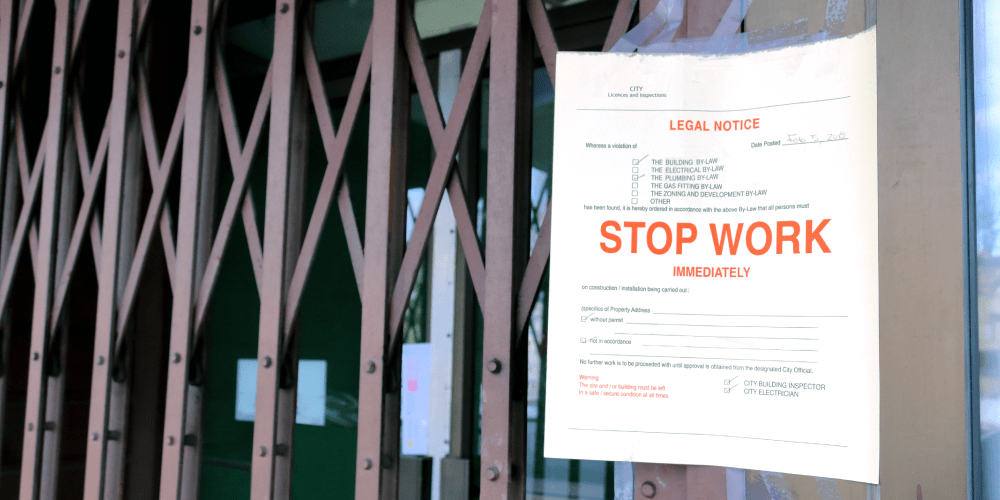
If you’ve never experienced one before, it can be overwhelming.
A Stop Work Order is exactly what it sounds like.
Construction stops.
Immediately.
No additional work should continue until the City authorizes the resumption of construction.
In Somerville, Stop Work Orders can happen for many reasons, including:
- Working without permits
- Performing work outside the approved plans
- Serious building code violations
- Unsafe job site conditions
- Structural concerns
- Failed inspections
- Using unlicensed contractors when licensing is required
Sometimes homeowners believe a Stop Work Order automatically means the project is over.
Fortunately, that’s usually not true.
Most Stop Work Orders can be resolved—but it often requires working closely with the Somerville Inspectional Services Department, architects, engineers, and a qualified licensed contractor.
At Velney Construction, we’ve helped homeowners navigate projects following Stop Work Orders.
The first step is never guessing.
The first step is understanding why the City stopped the project.
Once the issue is identified, we work with the homeowner and the City to create a clear path toward compliance.
Contact Us
We would love to hear from you! Please fill out this form and we will get in touch with you shortly.
Sometimes the City Won’t Allow the Contractor to Continue
This is something many homeowners don’t realize.
Occasionally, the issue isn’t simply correcting the work.
Sometimes the City loses confidence in the contractor’s ability to complete the project safely or legally.
In those situations, the homeowner may have little choice but to terminate the contractor and hire someone else.
This is another reason it’s important to work with licensed, experienced professionals from the very beginning.
Changing contractors halfway through a renovation almost always costs more than hiring the right contractor the first time.
Hiring an Unlicensed Contractor Can Become an Expensive Mistake
Another reason homeowners may need to fire a contractor is discovering that the contractor isn’t properly licensed.
Massachusetts has licensing requirements designed to protect consumers.
For many residential projects, contractors should have the appropriate credentials, including:
- Massachusetts Construction Supervisor License (CSL)
- Massachusetts Home Improvement Contractor (HIC) Registration
These aren’t just pieces of paper.
They demonstrate that the contractor has met state requirements and understands the laws governing residential construction.
At Velney Construction, we’re proud to maintain both our Massachusetts Construction Supervisor License and our Home Improvement Contractor Registration because we believe homeowners deserve that level of professionalism and accountability.
Why Licensing Matters
Hiring an unlicensed contractor can create problems that extend far beyond construction.
It may affect:
- Building permits
- Required inspections
- Insurance coverage
- Warranty claims
- Financing
- Future property sales
- Liability if someone gets injured on the job
Some homeowners assume they’re saving money by hiring the cheapest contractor.
Unfortunately, the least expensive proposal sometimes becomes the most expensive project.
When comparing estimates, don’t just compare price.
Compare qualifications.
Ask questions like:
- Are you licensed?
- Are you insured?
- Do you have workers’ compensation insurance?
- Will you pull the permits?
- Have you completed projects in Somerville before?
A quality contractor won’t be offended.
They’ll appreciate that you’re doing your homework.
Protect Yourself Before You Ever Hire a Contractor
One of the biggest lessons I learned from firing my own contractor is this:
The best time to prepare for a contractor dispute is before construction ever begins.
Everything starts with a strong contract.
At Velney Construction, we believe every homeowner should have a detailed written agreement that clearly explains everyone’s responsibilities.
Your construction agreement should include:
- Detailed scope of work
- Payment schedule
- Estimated timeline
- Change order procedures
- Permit responsibilities
- Insurance requirements
- Warranty information
- Project milestones
- Procedures for delays
- Termination clause
One of the most overlooked sections is the termination clause.
This section explains exactly how either party can terminate the agreement if the project isn’t progressing as intended.
Without one, firing a contractor can become much more complicated.
A well-written agreement protects both the homeowner and the contractor.
Document Everything
Even the best contract needs supporting documentation.
If problems begin developing, start creating a paper trail immediately.
Keep copies of:
- Emails
- Text messages
- Invoices
- Change orders
- Inspection reports
- Payment receipts
- Daily progress photos
- Project schedules
- Written notes from meetings
Whenever possible, follow important phone conversations with an email summarizing the discussion.
For example:
“Per our conversation today, you indicated the framing inspection is scheduled for Friday, and drywall installation will begin next Monday.”
That one email may become incredibly valuable later.
Documentation removes uncertainty.
If a disagreement ever ends up in court, arbitration, or mediation, written records are often much stronger than memories.
As someone who has personally gone through that process, I can’t emphasize this enough.
Document everything.
It may feel unnecessary today, but it could protect your investment tomorrow.
How to Fire a Contractor Professionally
Once you’ve made the difficult decision to move on, it’s important to handle the situation professionally.
You don’t need to argue.
You don’t need to raise your voice.
You don’t need to make the situation personal.
Instead, focus on being clear, respectful, and direct.
A simple statement such as:
“We appreciate the work completed to date. However, due to ongoing concerns regarding the project, we are terminating our agreement effective immediately. Thank you for your efforts, and we wish you the best moving forward.”
Is often all that’s needed.
Remember:
- Don’t over-explain.
- Don’t argue about every detail.
- Don’t leave the door open if you’ve made your decision.
- Stay professional.
- Put everything in writing.
The goal is to end the relationship—not create another dispute.
Notify the Contractor in Writing
One of the biggest mistakes homeowners make is firing a contractor with only a phone call or text message.
While verbal conversations are important, they should never be your only documentation.
If you terminate a contractor, you should send a formal written notice.
I strongly recommend homeowners send the notice by Certified Mail with Return Receipt Requested.
This provides proof that the contractor received your termination letter.
Your termination package should include:
- A written notice stating the contract is being terminated
- The reasons for termination (if appropriate)
- The effective date
- A request that no additional work be performed
- Instructions for returning keys, garage openers, or access devices if necessary
Keep copies of:
- The signed letter
- The certified mail receipt
- The delivery confirmation
- Any email copies you send
Having this documentation can be extremely valuable if questions arise later.
As someone who has personally been through contractor disputes, I can tell you that documentation matters.
Notify the City of Somerville If Permits Are Open
If your contractor pulled permits—or if permits should have been pulled—you should also contact the City of Somerville Inspectional Services Department (ISD).
Many homeowners don’t realize this step is important.
The City needs to know who is responsible for the project moving forward.
Depending on the circumstances, ISD may require:
- A new licensed contractor to assume responsibility
- Permit amendments
- Additional inspections
- Engineering reports
- Updated construction drawings
- Corrections before work resumes
Ignoring the City doesn’t make the problem disappear.
In fact, it usually creates bigger issues later.
One thing I’ve learned from working on construction projects throughout Somerville is that communication with ISD goes a long way.
The inspectors want projects completed safely and in accordance with code.
Working collaboratively with them is almost always the fastest path toward getting your project moving again.
Can Another Contractor Finish Someone Else’s Project?
The answer is:
Yes—but it’s rarely as simple as picking up where the previous contractor left off.
This is actually one of the services Velney Construction provides for homeowners throughout Somerville and the Greater Boston area.
When we take over an unfinished project, we don’t simply start building.
We first determine whether the existing work is safe, code-compliant, and worth keeping.
Our process typically includes:
Reviewing Existing Construction
We inspect completed work to determine its quality and identify potential concerns.
Reviewing Permits and Inspections
We determine:
- Which inspections have already occurred?
- Which inspections are still required?
- Whether permits need to be transferred or amended.
Identifying Code Violations
Sometimes deficiencies are obvious.
Other times they’re hidden behind finished walls.
Depending on the situation, portions of completed work may need to be opened so inspectors can verify compliance.
Although homeowners never enjoy hearing this, correcting problems early is almost always less expensive than discovering them years later.
Working With Architects and Engineers
Some projects require updated drawings.
Others require structural engineering letters.
If zoning or structural issues exist, additional professional consultants may be necessary before construction resumes.
Fortunately, because Velney Construction regularly works with architects, engineers, and local officials, we help coordinate these moving pieces to get projects back on track.
Developing a New Project Schedule
One thing homeowners appreciate after hiring us is realistic scheduling.
Rather than making promises we can’t keep, we build a schedule based on:
- Existing project conditions
- Material availability
- Permit timelines
- Inspection scheduling
- Trade coordination
Clear expectations reduce surprises.
Why Homeowners Throughout Somerville Choose Velney Construction
There are many contractors serving Greater Boston.
What makes Velney Construction different is our perspective.
We don’t just understand construction.
We understand what it’s like to be the homeowner.
I know what it feels like to lose confidence in the person managing your investment.
I know what it feels like to wonder whether the project will ever be finished.
I know what it feels like to spend nights worrying about delays, budgets, permits, and court proceedings.
That’s why our company is built differently.
We focus on:
- Honest communication
- Detailed project planning
- Transparent pricing
- Proper permitting
- Massachusetts Building Code compliance
- Quality craftsmanship
- Professional project management
- Respect for our clients and their homes
As a local general contractor based in Somerville, Massachusetts, we understand the City’s permitting process, local building requirements, and the importance of maintaining strong relationships with the Somerville Inspectional Services Department (ISD).
We’re proud to hold:
- Massachusetts Construction Supervisor License (CSL)
- Massachusetts Home Improvement Contractor (HIC) Registration
- Full insurance coverage
- OSHA training
- Numerous professional certifications
Because we’re local, we’re also familiar with the unique challenges of renovating Somerville’s historic homes, multifamily properties, triple-deckers, condominiums, and commercial buildings.
Whether you’re remodeling a kitchen, renovating a multifamily investment property, recovering from a Stop Work Order, or hiring a contractor after someone else abandoned the project, our goal remains the same:
Protect your investment while delivering exceptional craftsmanship.
Final Thoughts
Firing a contractor doesn’t mean your project has failed.
Sometimes it’s the exact decision needed to save it.
While no homeowner wants to have that conversation, continuing with the wrong contractor often leads to more delays, higher costs, and greater frustration.
Trust your instincts.
Protect your investment.
Document everything.
Communicate professionally.
Follow the proper legal procedures.
Work closely with the City when permits are involved.
Most importantly, don’t lose hope.
I’ve personally lived through this experience.
I was once the homeowner searching for answers after a contractor let me down.
That difficult chapter ultimately led me to create Velney Construction—a company built on transparency, professionalism, accountability, and doing the job right.
Today, we have the privilege of helping homeowners throughout Somerville and the Greater Boston area complete projects with confidence.
Sometimes the best part of your renovation begins the day you hire the right contractor.
Frequently Asked Questions
Can I fire a contractor before the project is finished?
Yes. In Massachusetts, homeowners can terminate a contractor, but they should first review their construction agreement and follow the termination provisions outlined in the contract. Consulting with an attorney is also recommended if significant money or legal issues are involved.
Should I send a termination letter?
Absolutely.
Always provide written notice.
Sending the letter by Certified Mail with Return Receipt Requested provides documentation that the contractor received your notice.
What if my contractor never pulled permits?
If permits were required but never obtained, contact the City of Somerville Inspectional Services Department (ISD) immediately.
They can explain the next steps and help determine how the project can be brought into compliance.
Can I hire another contractor to finish the work?
Yes.
An experienced licensed contractor can evaluate the existing work, identify code issues, coordinate with the City, and safely complete the project.
What licenses should my contractor have?
For many residential projects in Massachusetts, contractors should have the appropriate licensing and registration, including a Massachusetts Construction Supervisor License (CSL) and a Massachusetts Home Improvement Contractor (HIC) Registration, along with proper insurance. Always verify the requirements for your specific project.
What should I do if my contractor received a Stop Work Order?
Don’t ignore it.
Contact the Somerville Inspectional Services Department, understand why the Stop Work Order was issued, document the current project conditions, and consult with a qualified licensed contractor about the best path forward.
Why choose Velney Construction?
Velney Construction is a Somerville, MA-based general contractor specializing in residential renovations, multifamily rehabs, additions, commercial construction, and helping homeowners recover from unfinished or troubled construction projects.
Because we’ve experienced contractor disputes from both the homeowner’s and contractor’s perspectives, we understand the importance of communication, proper permitting, quality workmanship, and protecting your investment every step of the way.
Ready to Get Your Project Back on Track?
If you’ve had to fire a contractor in Somerville, Massachusetts, you don’t have to navigate the next steps alone.
At Velney Construction, we specialize in evaluating unfinished projects, correcting code issues, coordinating with architects and engineers, working with the Somerville Inspectional Services Department (ISD), and completing renovations the right way.
Whether your project involves a Stop Work Order, missing permits, poor workmanship, or a contractor who abandoned the job, our team can help you move forward with confidence.
Contact Velney Construction today to schedule a consultation. We’ll review your project, explain your options, and develop a clear plan to protect your investment and get your renovation back on track.